
Loading...
Serving Maplewood, MN and surrounding areas. (612) 493-3415
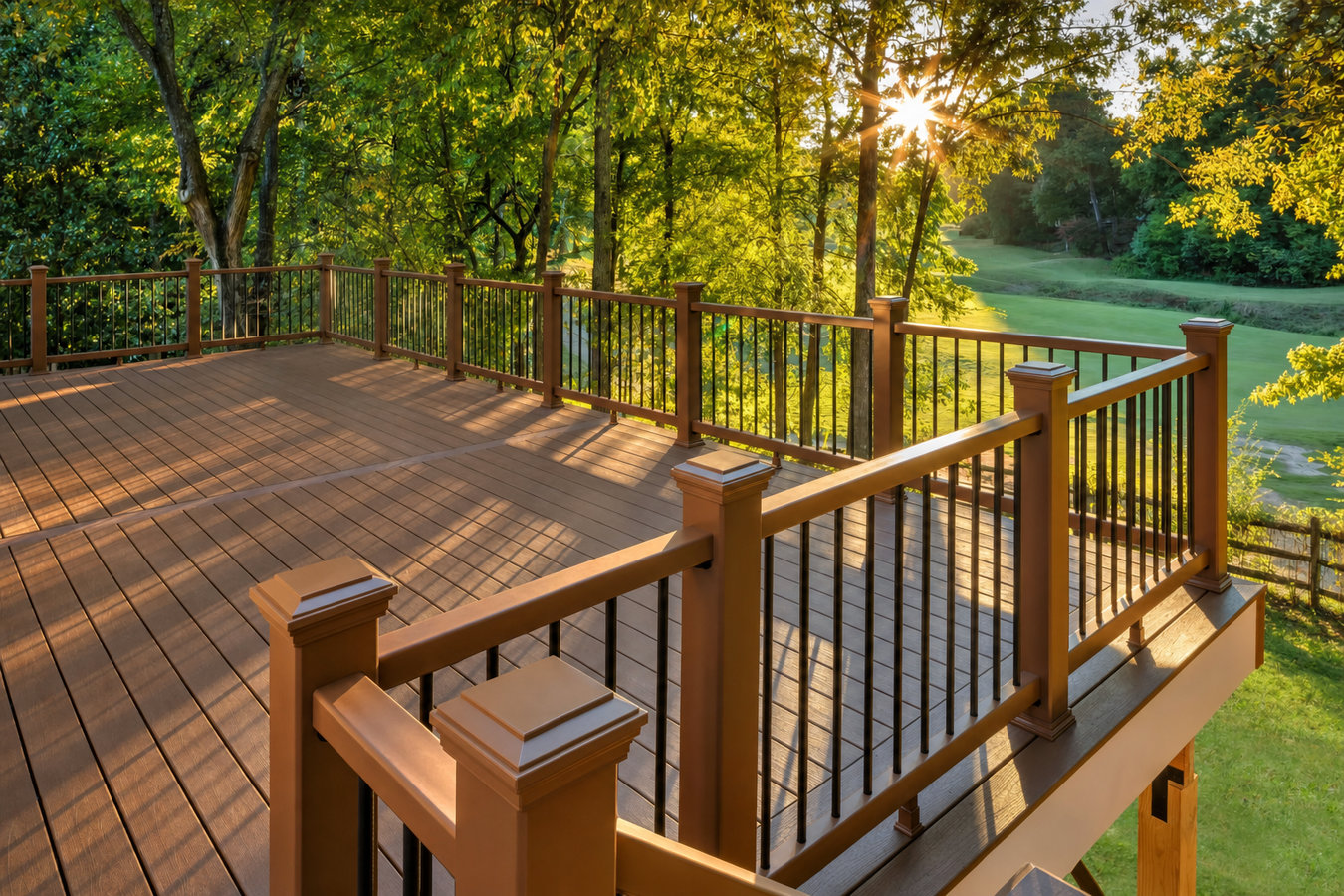
A wobbly railing is not just annoying - it is a safety problem. We install deck railings that stay solid through Maplewood winters, bolted correctly and built to pass inspection.
Deck railing installation in Maplewood, MN means removing the old railing if there is one, setting new posts into the deck frame, then attaching the top and bottom rails and balusters - most standard residential projects complete in one to two days once the permit is in hand.
The part that matters most - and the part homeowners cannot easily see - is how the posts are attached to the deck frame. Posts bolted through the rim joist with the right hardware stay solid for years. Posts just screwed to the decking surface will loosen over time, especially here in Maplewood where the freeze-thaw cycle works on every connection every single winter. Maplewood's housing stock skews heavily toward homes built in the 1960s through 1980s, and many of those older decks have railings that were not built to today's standards - or that have simply worn out after decades of Minnesota weather. If your deck needs structural attention before a new railing can be properly anchored, we flag that before we quote so you are not surprised later. For decks that need more than just a railing, our custom deck design and build service can address the whole structure at once.
Any deck surface 30 inches or more above the ground requires a railing by code in Minnesota - not optional. Baluster spacing must be 4 inches or less to prevent young children from slipping through, and stair handrails must be graspable. These are not details a good contractor will leave to chance, and they are exactly what the city inspector checks before the permit closes.
Stand at the middle of your railing and push firmly outward, then side to side. If it moves, flexes, or makes a creaking sound, the posts are no longer anchored securely. A wobbly railing is a real safety hazard, especially for children and older adults who rely on it for balance - not just something to live with until next season.
After years of Maplewood winters, wood railings that have not been regularly sealed will look weathered - gray, rough, and sometimes visibly cracked. If the wood feels soft when you press on it, or if pieces are splintering off, the material has broken down past the point where painting or sealing will fix it. That is a sign the railing needs replacement, not refinishing.
Hold a tape measure up to the space between two balusters. If the gap is wider than 4 inches - roughly the width of your fist - the railing does not meet current safety standards for child safety. This is especially common on decks built before the mid-1990s, when spacing requirements were less strictly enforced in Maplewood and elsewhere.
If your deck surface is 30 inches or more off the ground and has no railing, you almost certainly need one by code - and may not have one if the deck was added informally or without a permit. This is one of the most common issues on older Maplewood homes where decks were built before current inspection requirements were in place.
We install wood, composite, and aluminum railing systems - each material with a different trade-off between upfront cost and long-term maintenance. Wood is the most familiar and easiest to repair, but it needs to be sealed every couple of years to hold up through Maplewood winters. Composite and aluminum cost more upfront and handle the freeze-thaw cycle with almost no annual upkeep - which is why most homeowners who plan to stay in their home long-term choose one of those two. If you are adding a railing to a newly built deck, pairing the installation with a full composite deck installation keeps the material consistent and simplifies long-term maintenance.
We also handle stair handrail installation and replacement. Stair handrails have their own code requirements - they must run the full length of the staircase and be graspable, meaning you can wrap your hand around them rather than just resting your palm on a flat board. This is one of the most commonly missed details on older decks, and it matters most in wet or icy conditions. If you are replacing the railing on an older custom-built deck, we will check the stair handrail as part of the project and flag anything that needs attention.
A cost-effective option for homeowners comfortable with seasonal maintenance - natural look, easy to repair, needs sealing every one to two years.
Best for homeowners who want a wood-like appearance without the upkeep - handles Minnesota winters well with almost no annual maintenance required.
Ideal for a clean, modern look - extremely durable in freeze-thaw climates and requires virtually no maintenance beyond occasional cleaning.
Graspable handrails that meet current code requirements - installed as a standalone project or as part of a full railing replacement.
Maplewood sits in a climate zone where the ground freezes deep every winter and thaws every spring. That repeated movement slowly loosens posts that are not anchored correctly - especially on older decks where the hardware was not designed for this kind of stress. A large share of Maplewood homes were built between the 1960s and 1980s, and the decks on those homes - if they have not been replaced - are often approaching or past the end of their useful life. The wood underneath may be soft enough that new posts cannot be anchored properly without some structural repair first. We check the deck frame before we quote, so you know exactly what you are getting into before any work starts. We also serve homeowners across the east metro, including Little Canada and White Bear Lake, where the same freeze-thaw conditions and permit requirements apply.
The City of Maplewood requires a permit for most railing work - both new installations and full replacements. Pulling a permit adds a small cost and a few days to the timeline, but it also means a city inspector signs off on the work. That sign-off matters when you sell your home - buyers' agents and home inspectors routinely flag unpermitted deck work, and fixing it after the fact is almost always more expensive than doing it right the first time. The North American Deck and Railing Association publishes standards on railing construction and post attachment if you want to understand what a correctly built railing looks like before your first estimate. You can also verify any Minnesota contractor's license status through the Minnesota Department of Labor and Industry.
We ask the size of your deck, whether you have an existing railing, and roughly what material you are interested in. Most first calls are short. We schedule an in-person visit within a week or two and respond within one business day of your initial contact.
We measure your deck, check the condition of the existing structure, and talk through material options. We flag any issues with the deck frame that could affect the installation before we quote - no surprises after the job starts. Written estimate within a few days.
Once you agree to move forward, we apply for the building permit through the City of Maplewood. Typically approved in a few business days to a week. You do not need to do anything for this step - just confirm upfront that we are pulling the permit, which we always do.
Most standard railing installations take one full day. We remove the old railing, set and anchor new posts through the frame, attach the rails, and install balusters. The city inspector verifies the work meets code and closes the permit. Before we leave, we walk the railing with you.
Free on-site estimates. We pull the permit, handle the inspection, and give you a written price before any work starts.
(612) 493-3415Surface-mounted posts look the same as through-bolted ones when the job is fresh. After a few Maplewood winters, the difference is obvious. Every post we set is anchored through the rim joist with hardware designed for that purpose - the method that stays solid through years of freeze-thaw stress.
On older Maplewood homes, the wood a railing must anchor to may already be soft or damaged. We check the deck frame before we give you a price. If there is a structural issue that would undermine a new railing, we tell you honestly rather than letting you find out after the job is done.
We apply for the City of Maplewood building permit, schedule the required inspection, and make sure everything is on the record. When the time comes to sell your home, your deck railing is an asset - not a question about whether it was done right.
The 4-inch baluster rule and graspable handrail requirement are details the city inspector will check. We measure every gap and verify stair handrail compliance on every project - the same whether someone is watching or not. This is what first-time pass inspections look like.
A deck railing is a small project that has a real impact on safety and home value. We treat it with the same care as a full deck build - because the consequences of cutting corners on post attachment show up in a Maplewood winter, not during the install.
If your deck needs more than a new railing, we can design and build a replacement from scratch - properly engineered footings, correct framing, and railing built in from day one.
Learn MorePairing composite railing with composite decking keeps maintenance consistent and extends the life of both - one contractor, one project, one warranty.
Learn MoreSpots fill quickly once the weather turns - reach out now to lock in a date and get a written estimate before the spring rush hits.